
Troup County Jail Dates vs GDC Dates
The Troup County Jail roster is a current-custody tool, not a sentence calculator. Its record structure can include booking and release-date fields, but a displayed field must be read in context. A pretrial detainee may leave after bond, dismissal, a court order, time-served credit, or transfer. Another agency hold can prevent community release even when the local case changes.
| Custody | Date source | Meaning |
|---|---|---|
| Troup County Jail | Jail and court record | Local release event or transfer |
| GDC prison or transitional center | GDC offender search | State custody status and available dates |
| Parole consideration | TPM Lookup | Tentative month for final review |
| After release | Release record, parolee search, DCS | Actual disposition and supervision |
How to Find a Troup County Inmate Release Date
Choose the route from the custody type rather than searching every system as if each covered the same people.
- Search the Troup current-inmate roster to see whether the person remains in county custody.
- For a local case, use the booking or case number in the Clerk record and ask the jail for the release disposition.
- For GDC custody, open the GDC Find an Offender page and search by name, ID, case number, age, or other available identifiers.
- For parole timing, use the Board's TPM Lookup guidance and distinguish tentative review from final release.
- Register through Georgia VINE when a future custody-change alert is useful, then obtain a durable agency record after release.
The VINELink Release Check explains notification registration. VINE is a status signal, not a certified historical release record.
What Changes a Troup County Release Date?
Local jail dates can change faster than prison projections because a new order or hold can alter the release path without a sentence calculation.
| Event | Possible effect |
|---|---|
| Bond posted or modified | Allows release if no other hold blocks it |
| Warrant cleared | Removes one custody basis |
| Other-agency hold | Causes continued custody or transfer |
| Time-served credit | May complete a local sentence |
| Parole review | May set, move, deny, or cancel a tentative plan |
| PIC conduct result | May advance or delay an eligible state date |
The Troup roster exposes a last-updated timestamp but is not described as guaranteed real time. For an urgent pickup or safety decision, confirm with the jail or VINE rather than relying on a cached screen.
Georgia TPM, MRD, and PIC Dates
The State Board of Pardons and Paroles defines a Tentative Parole Month as the month when final review will occur and, if appropriate, a parole release date may be set. A TPM is not a final decision. Maximum Release Date, or MRD, refers to the sentence endpoint used in GDC and parole materials.
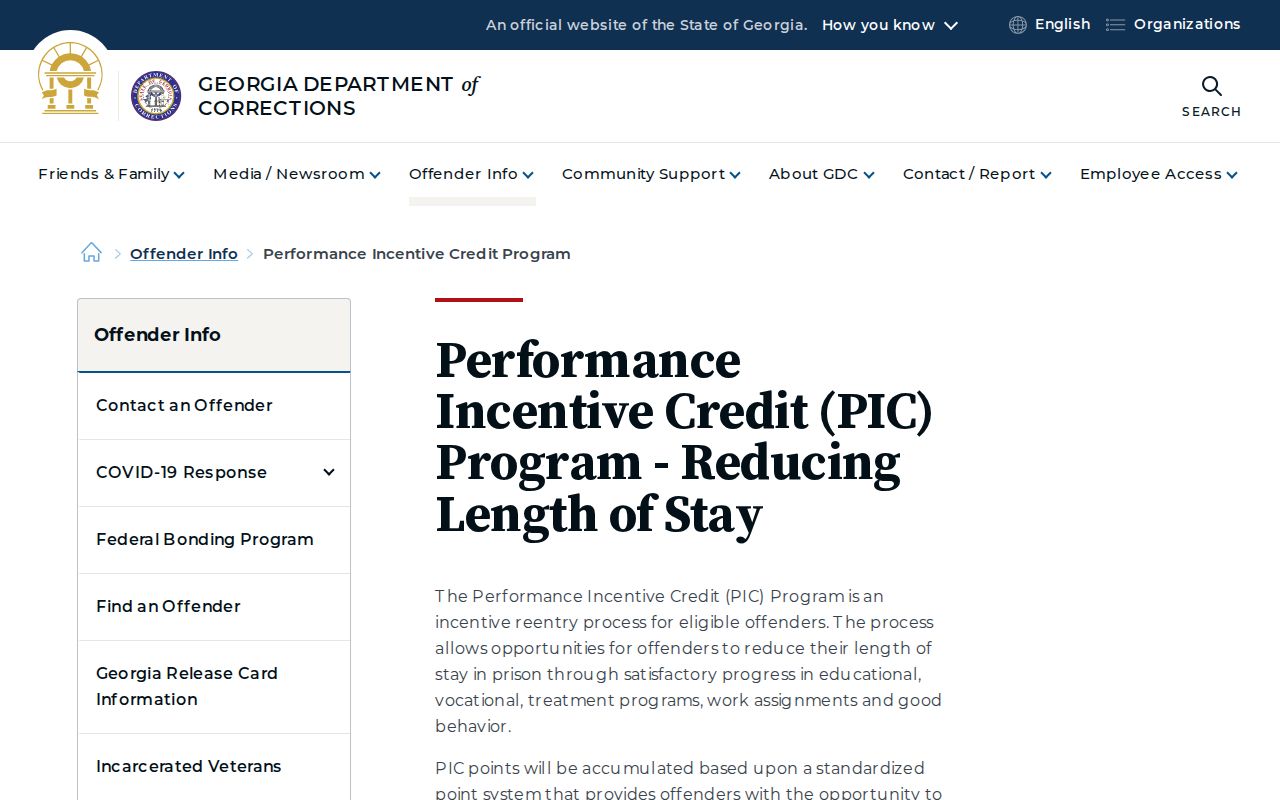
The GDC Performance Incentive Credit program allows eligible offenders to earn up to 12 points. Those points can potentially reduce a TPM or MRD by 1 to 12 months. The Board's decision guidelines describe a PIC date and the interval in which good conduct may advance a TPM. Poor performance may add time. Eligibility exclusions apply, so the program should never be presented as an automatic deduction.
The linked GDC page shows the state program in context:
Troup County Parole Eligibility Is Not Release
O.C.G.A. 42-9-45 gives general parole eligibility timing. Misdemeanor prisoners may be eligible after six months or one-third of the sentence, whichever is greater, while felony prisoners may be eligible after nine months or one-third. Other statutes and exceptions control many cases.
The Board summarizes most parole-eligible prisoners as eligible after serving one-third, but that rule is not a promise. Serious violent felonies under O.C.G.A. 17-10-6.1, mandatory minimums, repeat-offender statutes, life sentences, death sentences, non-parole offenses, and PIC exclusions can change the result. Read the conviction offense and sentence rather than applying one percentage to every person.
A public Board meeting calendar also does not reveal an individual's date. Monthly meetings address Board business and do not consider offender cases. Use person-specific TPM and parolee tools for status.
Troup County Release Proof After the Date
When a person drops off the current roster, request the booking and release record through the Troup JustFOIA portal. Ask for release date and time, release reason or disposition, authority for release, and whether the person went to the community or another agency. The Clerk case record can explain whether bond, dismissal, sentencing, probation, or time served produced the change.
Current county requests receive notice within three business days about responsive records and release availability. Requests filed before July 1, 2025 remain in the former GovQA portal. Troup also reports that open-records payments are temporarily limited to cash or check in person or by mail.
For state records, GDC accepts open-records requests under O.C.G.A. 50-18-70 et seq. GDC states that non-medical copies cost $0.10 each and staff search or redaction may be billed at the lowest-paid qualified employee's rate. Written verification for offender information may also be directed to Inmate Records and Information, PO Box 1529, Forsyth, GA 31029.
Troup County Transfers Are Not Releases
The Troup agency list includes the United States Marshals Service and other-agency holds. A person can leave Troup County Jail because GDC, federal authorities, ICE, or another county accepts custody. That event ends the local jail stay but does not mean the person is free in the community.
Ask the jail record to identify the release disposition or transfer destination. Follow a GDC transfer in the state offender search, a federal case in the BOP Inmate Locator when applicable, and an immigration transfer in the ICE Online Detainee Locator. This custody-specific follow-up prevents a projected date or roster disappearance from being mistaken for an actual community release.
How Troup County Date Fields Differ
A booking date marks entry into the jail record, not the beginning of every sentence. An arrest date may come first. A bond-setting date identifies when bond terms were set, not when money was posted or the jail completed release processing. A release-date field may be projected, entered after processing, or associated with a transfer. Read the exact label and current status before repeating any date.
The Troup data model can also include arresting agency, charges, case number, bond amount, bond status, physical descriptors, and an IsReleased value. These fields help distinguish people and connect a booking to court records, but the public list remains current-custody oriented. The interface may stop showing a person after release, and no official retention period for former bookings was verified.
Case numbers connect jail data to the court docket. That docket may contain a bond order, plea, sentence, dismissal, probation disposition, revocation order, or credit for time served. Troup court calendars can change, so they do not prove that a hearing occurred or custody ended. Obtain the actual docket entry or signed order when the legal basis for a date matters.
Troup County Release Date Request Details
A narrow request is easier for the county to identify and less likely to produce unrelated material. Include the full name, approximate age or birth date if known, booking date, booking ID, SO number, and case number. Ask for the public booking and release record, actual release date and time, reason or disposition, public release authority, and whether the person went to the community or another agency.
Troup County says costs may include search, retrieval, copying, redaction, production, and supervised inspection. Charges use the rate of the lowest-paid qualified full-time employee, and the first 15 minutes are free. The county lists 706-883-1610 and vwest@troupcountyga.gov for open-records questions. These details allow a requester to seek a cost estimate instead of assuming the record will be free.
For GDC records, identify the person by GDC ID and state facility if known. GDC lists common exceptions for institutional files, investigations, personal information, safety procedures, and medical or mental-health material. Ask for the public status and release or discharge record rather than protected file contents. The three-business-day rule is an initial response requirement, not a promise that every record will arrive within that period.
Federal and Immigration Date Checks in Troup County
A United States Marshals Service hold in the Troup roster can lead to federal transfer. The Bureau of Prisons Inmate Locator covers federal inmates from 1982 forward and may display release information for people no longer in BOP custody. A BOP date proves a federal record, not the date the person left Troup County Jail. The local release record remains necessary to establish the transfer out.
When immigration custody follows a county stay, use the ICE Online Detainee Locator. A county entry may end on the day ICE takes custody, yet the person has not been released into the community. Ask “released to whom or where?” and follow the agency named in the disposition. This question also applies to neighboring counties, GDC, and other holds.
VINE remains useful as an alert layer for participating custody sources. Register before an expected change, keep any notification, and then verify through the agency that controlled the event. A no-result screen may reflect spelling, custody type, lag, or limited historical coverage. It should never be converted into an exact release date without the underlying record.
A local sentence may end through time-served credit rather than a date calculated by GDC. The signed sentencing order and jail release record are the sources for that result. If a bond is posted, confirm that staff completed release processing and no warrant or outside hold remains. A bond receipt alone does not establish the time the person left.
For state custody, compare the GDC query with Board records at more than one stage. A TPM can move during final review, and PIC performance can affect an eligible TPM or MRD. A parole grant can also be canceled before release. The reliable after-the-fact answer is the later GDC status plus the parolee or DCS record when supervision follows.
Write down when each public source was checked. The Troup roster, GDC query, Board tools, and VINE can refresh on different schedules. A dated note helps explain why two screens captured hours apart do not match, while the agency release record supplies the lasting event date. Save the booking and case identifiers with that note so the later request reaches the same person and custody event.