
Understanding Troup County Released Inmates
A person is released from Troup County Jail when local custody ends, but that event does not always mean the person walked into the community without another obligation. The outcome may be bond, time served, completion of a local sentence, dismissal, probation, transfer to the Georgia Department of Corrections, or movement under a federal or other-agency hold. The releasing entry and its disposition determine where the next reliable record will be kept.
The Troup County Sheriff's Office operates the local jail and its public Tyler Corrections Records Search is labeled “All current inmates.” Once a person is gone from that list, the absence is a useful clue, not proof of why custody ended. A jail booking and release record establishes the local event. A Troup Clerk case record explains the court action. GDC, the State Board of Pardons and Paroles, or the Department of Community Supervision may hold the next record when state custody or supervision follows.
Troup County Release Types and Next Records
The reason for release controls the verification path. Local data can connect booking, arrest, charge, bond, case number, and a release flag, while the final legal meaning may appear only in the court or receiving-agency file.
| Release event | What it means | Best next source |
|---|---|---|
| Bond | Jail custody ends while the criminal case remains open. | Jail release record and Clerk case record |
| Time served or sentence complete | The local custody term has been credited or completed. | Court sentence or disposition plus jail release time |
| Probation | The court permits community supervision under stated terms. | Court order and the proper probation office |
| Parole or state discharge | A state offender leaves GDC custody under parole or at sentence end. | GDC offender search, Parole Board, and DCS |
| Agency transfer | The person leaves Troup custody but remains detained elsewhere. | Receiving state, federal, county, or ICE system |
Fields in a Troup County Release Record
A useful request identifies the booking rather than asking only whether a person was “released.” Troup's public data structure can contain identifiers and case details that help the Sheriff's Office or Clerk locate the correct event. Public visibility settings hide date of birth and mugshots, so those missing items should not be treated as evidence that no record exists.
| Field | What it shows |
|---|---|
| Booking ID or SO number | Connects the person to the specific jail admission. |
| Booking and arrest date | Separates one custody event from earlier cases. |
| Arresting agency | Shows the local, state, supervision, or federal source of the hold. |
| Charge and case number | Links jail data to the correct court file. |
| Bond amount and status | Helps explain whether bond was set or changed. |
| Release date and time | Records when local custody ended, when available. |
| Release flag or disposition | Signals release and may identify transfer or another outcome. |
| Last-updated timestamp | Shows when the public roster data was refreshed, not guaranteed real-time status. |
Note: Ask for the release disposition or transfer destination when roster disappearance alone does not show what happened next.
Requesting Troup County Jail Release Records
Troup County directs current open-records requests to its JustFOIA portal. A narrow request should name the person, approximate booking or release dates, booking or SO number if known, and the exact documents sought. Ask for the booking and release record, release date and time, release disposition, and transfer destination when applicable. Court dispositions should be requested from the Clerk rather than from jail staff.
- Review the Troup County Open Records page for current instructions.
- Submit the request through the JustFOIA public portal and retain its tracking number.
- Describe one custody event with known dates and identifiers instead of requesting an unlimited history.
- Watch the email address used in the portal because county communications are delivered there.
- For a final case result, compare the response with the Troup Clerk case search or request the court file.
Georgia's Open Records Act, O.C.G.A. 50-18-70 et seq., governs the process. Troup County states that it provides notice about responsive records and releasability within three business days. The first 15 minutes are not charged; later search, retrieval, redaction, and supervision costs use the rate of the lowest-paid qualified full-time employee. Copy or other lawful costs may also apply.
Troup County Portal Change and Payment Detail
Troup County's records process has a local cutoff that matters when following an older request. Requests filed before July 1, 2025 remain in the prior GovQA portal, while current requests use JustFOIA. A person looking for an old submission should not assume that its absence from the new portal means the request was lost.
The county also reports a temporary payment limitation of cash or check in person or by mail. Questions about requests or payment can be directed to 706-883-1610 or vwest@troupcountyga.gov. This administrative detail affects access, not whether a record is public. The agency may still withhold or redact material protected by law, and no stated public retention period for the released-person display was verified.
Georgia Law and Troup Release Records
O.C.G.A. 50-18-71 generally requires production within a reasonable time and a response within three business days when responsive records exist. It also permits lawful search, redaction, production, and copying charges. The response may identify exemptions or provide a time and cost estimate when records cannot be produced at once.
Search for a Released Troup County Inmate
The best search is a sequence, because no single source covers local jail release, state discharge, supervision, and federal transfer. Start with the agency most likely to have current custody, then follow the disposition rather than assuming that a person who vanished from one list is free.
- Search the Troup County current-inmate roster by the person's known identifying details.
- If listed, read booking, arresting-agency, charge, bond, and case details and note the roster update signal.
- If not listed, request the booking and release record from Troup County and check the Clerk's disposition.
- For a state transfer or state sentence, search GDC by name, ID, or case number and verify important results in writing.
- Check Georgia VINE for a custody-status signal and notification options, then use parole or DCS sources if supervision follows.
- Use the BOP locator for a federal custody path and the ICE locator only when immigration custody or a detainer is involved.
Troup County Current-Roster Data Quirk
Troup's Tyler application is more transparent than many jail lists because its public endpoints expose configuration without requiring use of any current inmate's identity. When checked July 15, 2026, the API returned 573 current records. The data model includes an IsReleased field, but testing did not reveal a distinct public release list.
Those technical facts do not turn the roster into a release archive. The visible list says “All current inmates,” and no official rolling 24-hour or 72-hour release feed was verified. Roster absence does not establish the legal reason someone left or replace a record from the Sheriff's Office.
Troup County Roster Update Signal
The public update endpoint provides a machine-readable timing clue. It returned 2026-07-15T19:51:04.410Z when checked July 15, 2026. That value shows when the app reported its last data update, which helps a reader judge whether a recent booking or departure may still be processing.
The signal is not a promise that every release appears at once. It does not state the release disposition and cannot distinguish a community release from transfer. For an urgent answer, call the jail. For durable proof, obtain the release record and related court document.
Georgia Offender Search for Troup Releases
The Georgia Department of Corrections search is the correct next stop only for a person in state custody or released from a GDC facility, including Charles D. Hudson Transitional Center. Georgia.gov directs county jail searches back to the county. The GDC search accepts identifying data and can show state offender information, status, and release-related dates when available.
| Search field | How it helps |
|---|---|
| Name | Starts a broad match when no corrections number is known. |
| GDC ID | Targets the state corrections record directly. |
| Case number | Connects a state record to a known prosecution. |
| Age and identifying details | Helps separate people with similar names. |
| Status and dates | Distinguishes current state custody from release or discharge information. |
The GDC Find an Offender page is the source shown in this captured view.
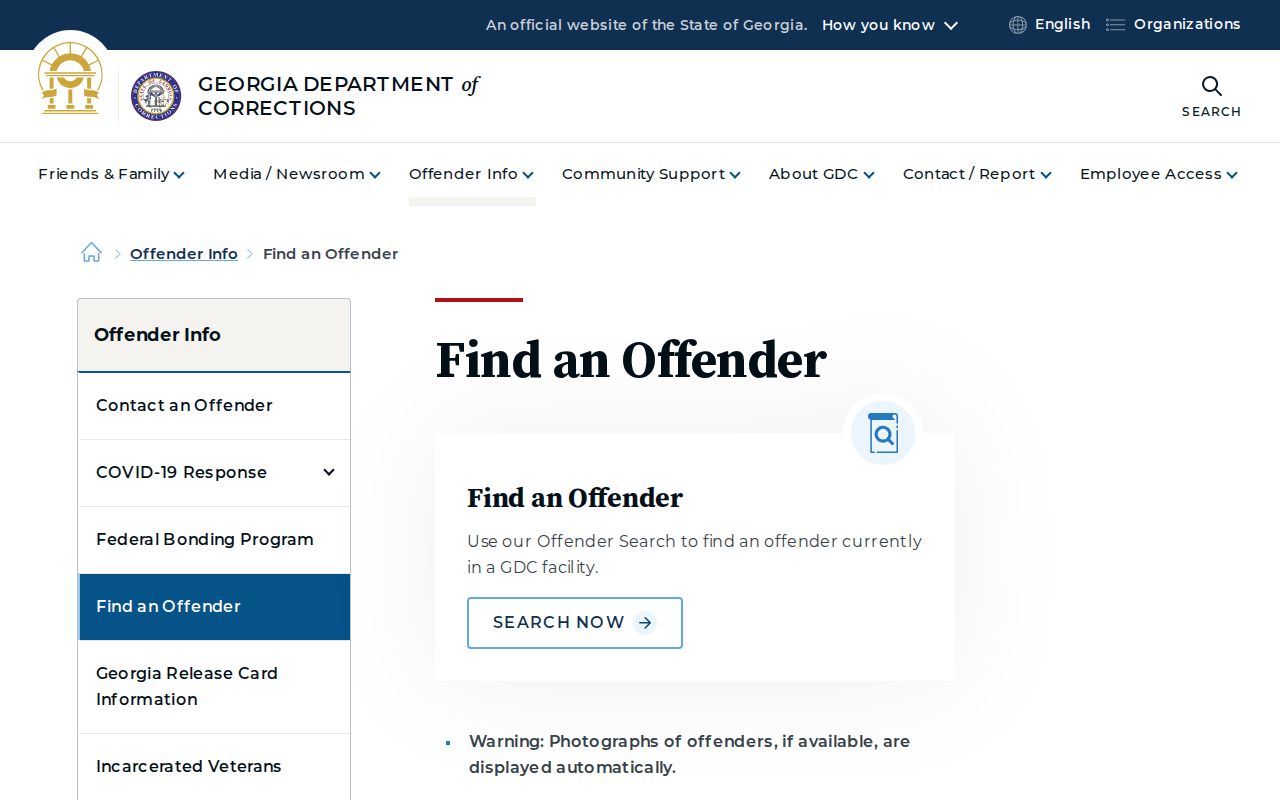
GDC instructs users to verify information through written correspondence with Inmate Records and Information at PO Box 1529, Forsyth, GA 31029. That verification is important when a date or status will be relied upon as a durable record.
Troup Court Records Explain Jail Release
A jail record shows custody activity, while the court record explains the legal case. Troup County State Court handles misdemeanor criminal violations, including traffic cases. The Clerk of Superior and State Courts maintains and provides access to court documents. Depending on the charge and court, the relevant file may show bond terms, dismissal, sentence, probation, time-served credit, or another order that caused release.
This distinction matters when the roster shows charges but no final result. Charges at booking are not a conviction or final disposition. Court calendars can change after posting and the Clerk advises consulting primary sources for verification and certification. Use the case number captured from the roster to reduce mistaken matches and request the signed order or disposition when the exact outcome matters.
Troup County Supervision After Release
Parole, felony probation, county probation, and State Court misdemeanor probation are separate channels. The State Board of Pardons and Paroles provides a TPM lookup for state inmates and a parolee search for people on parole. The Georgia Department of Community Supervision handles felony probation and parole supervision through its LaGrange office at 220 Fort Drive.
Troup County probation offices are at 100 Ridley Avenue, Suite 2500, while Judicial Correction Services of Troup County handles State Court misdemeanor probation at 1302 Lafayette Parkway, Suite D. A supervision record does not by itself prove the precise jail release time. It shows what obligation followed. Use the court order, jail release record, and the correct supervision office together when the statuses appear inconsistent.
Charles D. Hudson Reentry in Troup County
Charles D. Hudson Transitional Center gives Troup County a distinct state reentry path. GDC describes the LaGrange facility as minimum security, opened in 2003, with capacity for 155 residents and Rutledge State Prison as its host facility. Its mission focuses on social skills and training for residents returning to the community.
A resident leaving Charles D. Hudson is completing a state corrections or transitional-center release, not a Troup County Jail release. Search GDC first, then use Parole Board and DCS sources if supervision follows. The county jail roster is relevant only if that same person separately entered local jail custody. Keeping these systems apart prevents a common jurisdiction error.
Federal and Other-Agency Transfers from Troup Jail
The verified Troup roster agency list includes the United States Marshals Service and “Other Agency Hold (See Comments).” It also includes probation and parole agencies. That mix means a person can leave the Troup County Jail list without being released to the community. The person may have moved to federal custody, another county, state custody, or a supervision-related destination.
For a federal path, the Bureau of Prisons Inmate Locator can show records for federal inmates released from 1982 forward, including “Released” or “Not in BOP custody” and a date in some records. The ICE Online Detainee Locator applies only to immigration custody. Ask Troup County for the release disposition or transfer destination before choosing either system.
Released or Still Held in Troup County
Use the source that answers the actual custody question. A live roster is strongest for present local custody, while a release record is stronger for a past jail event.
| Situation | Primary source | What confirms it |
|---|---|---|
| Currently in Troup County Jail | Tyler current-inmate roster | Active booking and current listing |
| Released from Troup County Jail | Sheriff or county records | Release date, time, and disposition |
| Case outcome after local release | Troup Clerk | Filed order, sentence, or disposition |
| State custody or discharge | GDC offender search | State status and release-related record |
| Parole or felony supervision | Parole Board and DCS | Parolee or supervision status |
| Federal or ICE transfer | BOP or ICE locator | Receiving-agency custody record |
Troup County Release Facilities
Troup County has two different release systems within the county. The Troup County Jail is the primary local detention facility, where release proof comes from the jail record, county portal, and related court file. Charles D. Hudson Transitional Center is a GDC reentry facility, where release or discharge information belongs to state corrections, parole, and DCS sources. A location in LaGrange does not make both facilities part of the same custody system.